


Our TGV horns
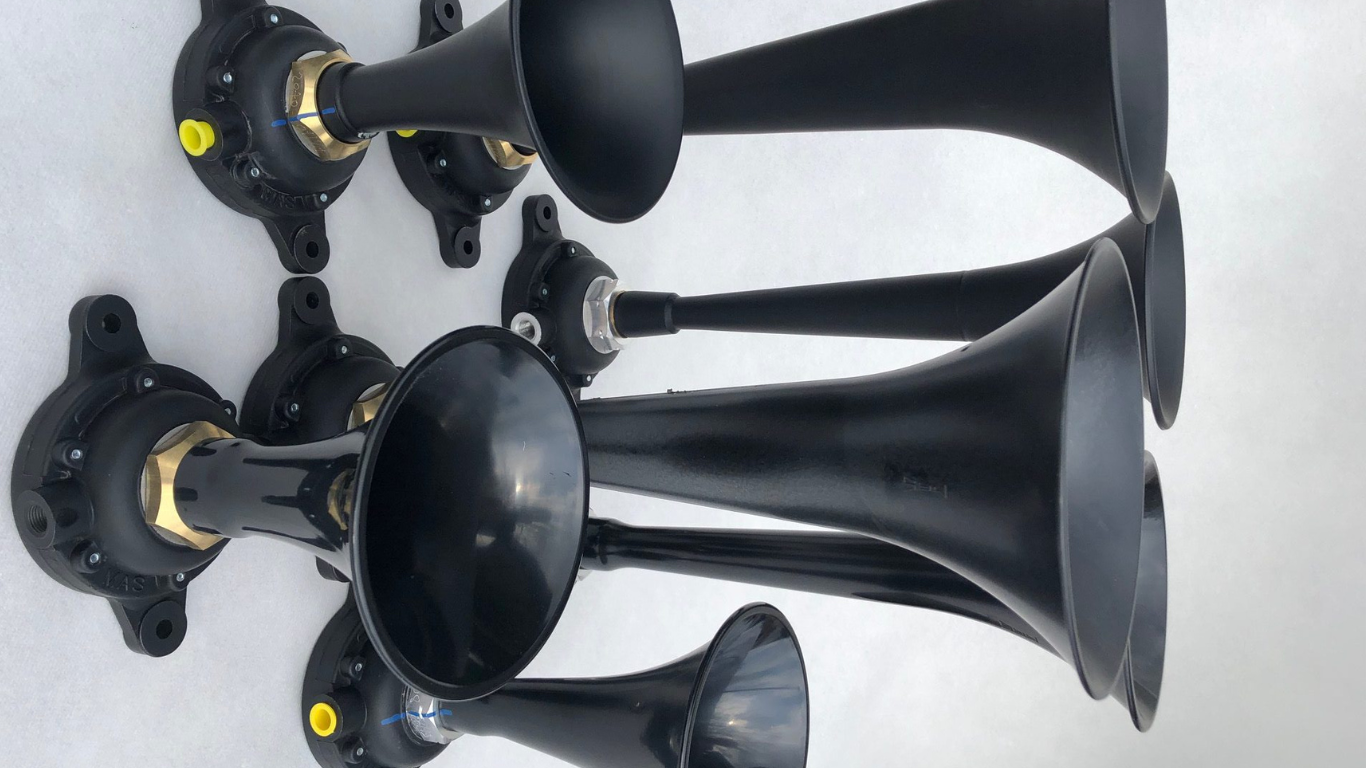
Pneumatic horn: design, operation and manufacturing
Composition of the horn
The clamping nut ensures mechanical assembly
The clamping nut plays a crucial role in the assembly of the horn. It ensures a precise and secure mechanical connection between the acoustic body and the bell.
An acoustic body incorporating a vibrating membrane
The acoustic body is the central element of the pneumatic horn. It receives compressed air and transforms pneumatic energy into acoustic vibration.
The clamping nut ensures mechanical assembly
The clamping nut plays a crucial role in the assembly of the horn. It ensures a precise and secure mechanical connection between the acoustic body and the bell.
Brazing
- of thunder and brass branch (bells in 2 pieces)
- of the mouthpiece on the brass pavilion
Painting
Torque tightening/screwing
We have a semi-anechoic chamber for calibrating audible alarms. We use a sound level meter and acoustic software to measure the power in dB and the fundamental frequency of the alarms. Our Class 1 sound level meters are calibrated annually by a certified laboratory.
The process below is applied to each warning device, thus ensuring complete traceability:
1. Manual adjustment of the horn on a test bench under the required air pressure
2. Tighten the nut with a torque wrench
3. Addition of a blue marking indicating the tightening point to indicate possible subsequent disassembly
4. Numbering of the horn and computer saving of measured performance